
Корзина пуста.
The Charter Party
Привет!
Сегодня изучим договор о фрахтовании (Charter Party). Этот документ — основа морской коммерции, на которой держатся международные перевозки.
Читайте статью или смотрите видео – разберемся в деталях просто и ясно!
WHAT IS A CHARTER PARTY?
When the Shipowner and the Charterer negotiate the terms and conditions of the carriage, their agreement is sealed by the Fixture Note. Fixture Note is the preliminary chartering agreement which confirms that negotiations have been concluded, and the ship has been fixed.
“Ship fixture” refers to the finalized agreement between a Shipowner and a Charterer for the hire of a vessel under agreed terms. It marks the conclusion of negotiations and the confirmation of a Charter Party (voyage, time, or bareboat).
On the basis of the Fixture Note, the Charter Party is drawn up.

Charter Party is a legally binding contract between a Shipowner and a Charterer, defining the terms under which a vessel is hired. It specifies key details such as freight or hire rates, duration, responsibilities of both parties, and provisions for delays, liabilities, and dispute resolution.
As the backbone of international shipping, Charter Parties establish the rights and obligations of Shipowners and Charterers. Their clauses, articles, and provisions govern the relationship between the parties, ensuring clarity and legal protection in maritime commerce.
“Clause” is a specific provision within a contract that addresses a particular aspect or subject, outlining the rights, duties, and obligations of the parties involved.
“Liability” is a legal obligation to pay for damages or consequences, while “responsibility” is the duty to carry out a task or fulfil an obligation. Liability often involves legal consequences, whereas responsibility focuses on the task at hand.
Если вам нужно разобраться подробнее в структуре морской коммерции и профессиональной терминологии, рекомендуем курс «Commercial English & Business Correspondence (including Manual)», который входит в выгодный сборник курсов «English For Seafarers Course Pack».
WHAT TYPES OF CHARTER PARTIES ARE THERE?
Due to the diverse operational and commercial needs in shipping, there are different types of Charter Parties that define the terms of vessel hire, cost allocation, and responsibility distribution.
The main types of charter parties include Voyage Charter, Time Charter, Bareboat Charter, Slot Charter, Contract of Affreightment (COA) and Trip Time Charter.
VOYAGE CHARTER
Under the Voyage Charter, the vessel is hired for a single voyage. The Shipowner undertakes responsibility to carry the cargo to the nominated destination(s) against payment of the agreed freight (usually calculated per ton of cargo). The Shipowner is responsible for operating costs, including fuel, crew wages, and maintenance.
freight
“Operating Costs” are the overall expenses incurred to manage and operate a vessel, covering both regular maintenance and voyage-related expenses.
“Running Costs” are the ongoing, routine expenses for keeping a vessel in service, including crew wages, maintenance and repairs, management fees, insurance, stores, spare parts and general operational expenses, but excluding variable costs like fuel or port charges.
TIME CHARTER
Under the Time Charter the vessel is hired for a particular period of time. The remuneration payable to the Owner is called the hire and is usually paid in a fixed amount per day or month. The Charterer decides where the vessel trades, but the Shipowner retains control over the crew and technical management. The Shipowner is responsible for running costs, while the Charterer covers voyage-related expenses such as fuel and port expenses.
BAREBOAT CHARTER (DEMISE CHARTER)
In the Bareboat Charter the vessel is leased without crew, provisions, or insurance for a certain period of time. The Charterer virtually takes over the entire responsibility for the operation of the vessel, acting as the de facto Shipowner, along with all expenses incurred.
Bareboat Charter implies a long-term lease and usually ends up with ship’s purchase when charter period expires. By obtaining overall control of the vessel, the Charterer bears all costs and responsibilities. Yet, the Shipowner is due to capital costs.
“Capital Costs” are the fixed costs related to the ownership of the vessel, including the purchase price, mortgage payments, registration fees and taxes.
SLOT CHARTER
Under the Slot Charter, the Charterer books specific space (slots) on a container vessel rather than hiring the whole ship. Payment is based on the number of container slots used. The Shipowner retains full control of vessel operations. Used by freight forwarders and shipping alliances in containerized trade.
CONTRACT OF AFFREIGHTMENT (COA)
COA is an agreement to transport a specified volume of cargo over multiple consecutive voyages within a set period. The Shipowner can use any suitable vessel to fulfil the contract, meaning different ships may be used for different shipments. Payment is based on total tonnage transported rather than individual voyages.
TRIP TIME CHARTER
A Trip Time Charter is a hybrid between a Voyage Charter and a Time Charter, designed for a single voyage but under time charter terms. The Charterer hires the vessel for one specific trip rather than a fixed time period. Payment is based on a daily hire rate, similar to a time charter, rather than a lump sum freight. The Charterer covers bunkers and port costs, while the Shipowner remains responsible for crew, maintenance, and vessel operations.
“Lump Sum” refers to a single, fixed payment made for a particular service or agreement, regardless of the specific amount or quantity involved. In shipping, lump sum freight is a one-time, agreed-upon fee for the entire voyage, regardless of cargo volume or weight.
Understanding the different types of Charter Parties is crucial for seafarers, particularly those in leadership roles like Captains and Chief Officers. Knowledge of how the vessel is chartered directly impacts their responsibilities and day-to-day operations. This understanding not only supports better decision-making but also enhances career development by equipping seafarers with the expertise needed for higher roles within the maritime industry!
VOCABULARY
- Charter Party – чартер партия (договор фрахтования)
- negotiate the terms and conditions of the carriage – согласовывать условия перевозки
- seal the agreement – заключить (подтвердить) соглашение
- Fixture Note – фиксчюр нот (предварительный документ, фиксирующий факт фрахтования судна)
- preliminary chartering agreement – предварительное соглашение по чартеру
- conclude the negotiations – завершить переговоры
- fix the ship – заключить соглашение о фрахтовании судна
- ship fixture – факт фиксации судна (заключения соглашения о фрахтовании)
- draw up a document – составить документ
- legally binding contract – юридически обязательный (обязывающий) контракт
- freight / hire rates – ставки фрахта / аренды (найма) судна
- provisions – положения (пункты) договора
- liability – ответственность (в юридическом контексте)
- dispute resolution – разрешение споров
- establish rights and obligations – устанавливать права и обязательства
- clause – пункт, оговорка (контракта)
- govern the relationship between the parties – регулировать отношения между сторонами
- damages – убытки, компенсация ущерба
- legal consequences – юридические последствия
- cost allocation
- responsibility distribution
- Voyage Charter – рейсовый чартер
- undertake / take over responsibility – брать на себя ответственность
- nominated destination – назначенный (оговоренный контрактом) пункт назначения
- operating costs – эксплуатационные расходы
- incur expenses – нести расходы
- running costs – текущие расходы
- Time Charter – тайм чартер (договор фрахтования судна на время)
- remuneration – вознаграждение, оплата
- retain control – сохранять контроль
- Bareboat Charter (Demise) – бербоут чартер (договор фрахтования судна без экипажа и судовых запасов)
- lease the vessel – арендовать судно
- de facto – фактически
- ship’s purchase – покупка судна
- bear costs and responsibilities – нести расходы и ответственность
- capital costs – капитальные расходы
- mortgage payment – выплаты по закладной
- Slot Charter – слот-чартер (аренда определенного пространства на контейнеровозе)
- freight forwarder – экспедитор груза
- shipping alliance – судоходный альянс
- Contract Of Affreightment (COA) – договор морской перевозки на последовательные рейсы
- over multiple consecutive voyages within a set period – на нескольких последовательных рейсах в пределах установленного периода
- shipments
- Trip Time Charter – трип тайм чартер (аренда судна на один рейс с оплатой за время)
- lump sum – единовременная сумма
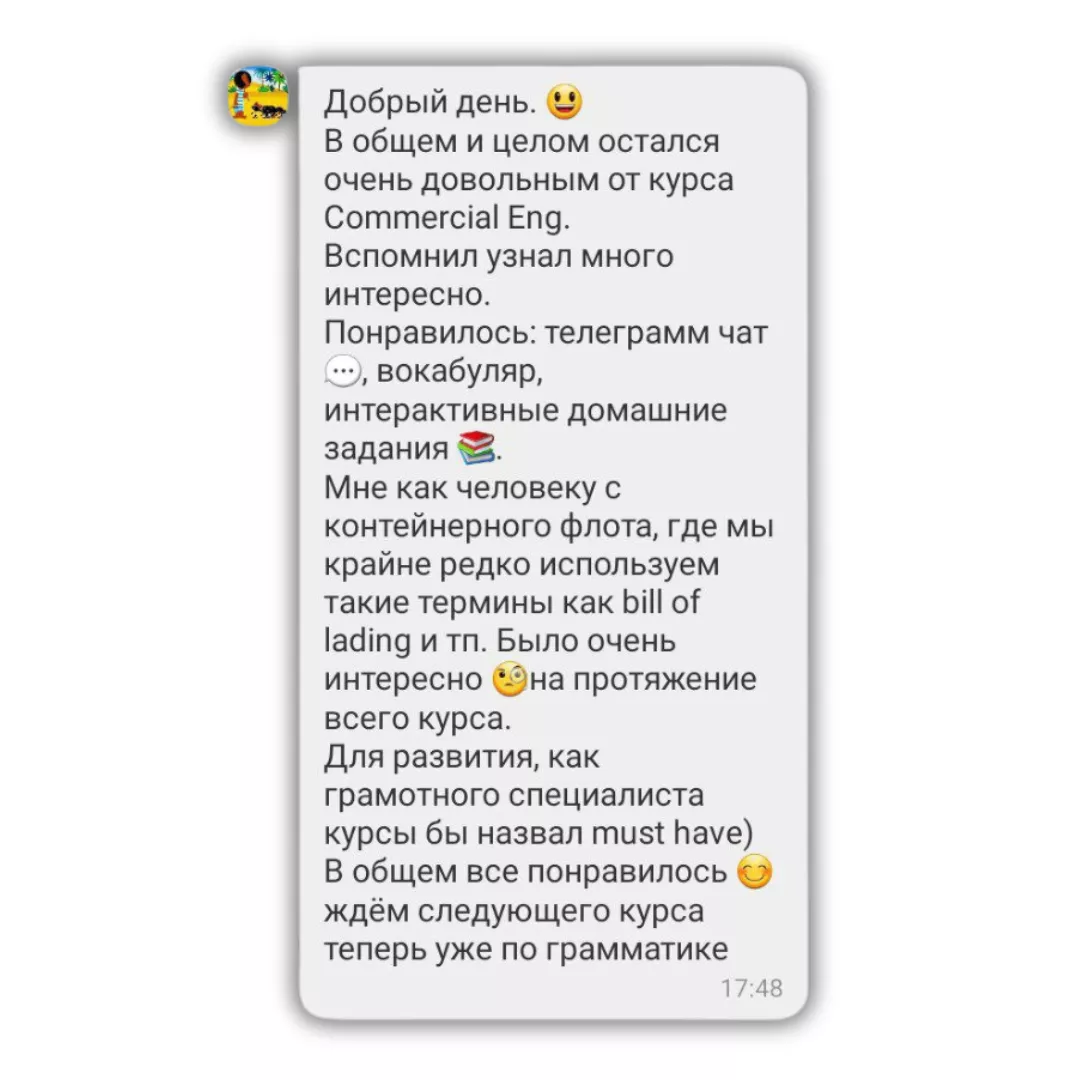
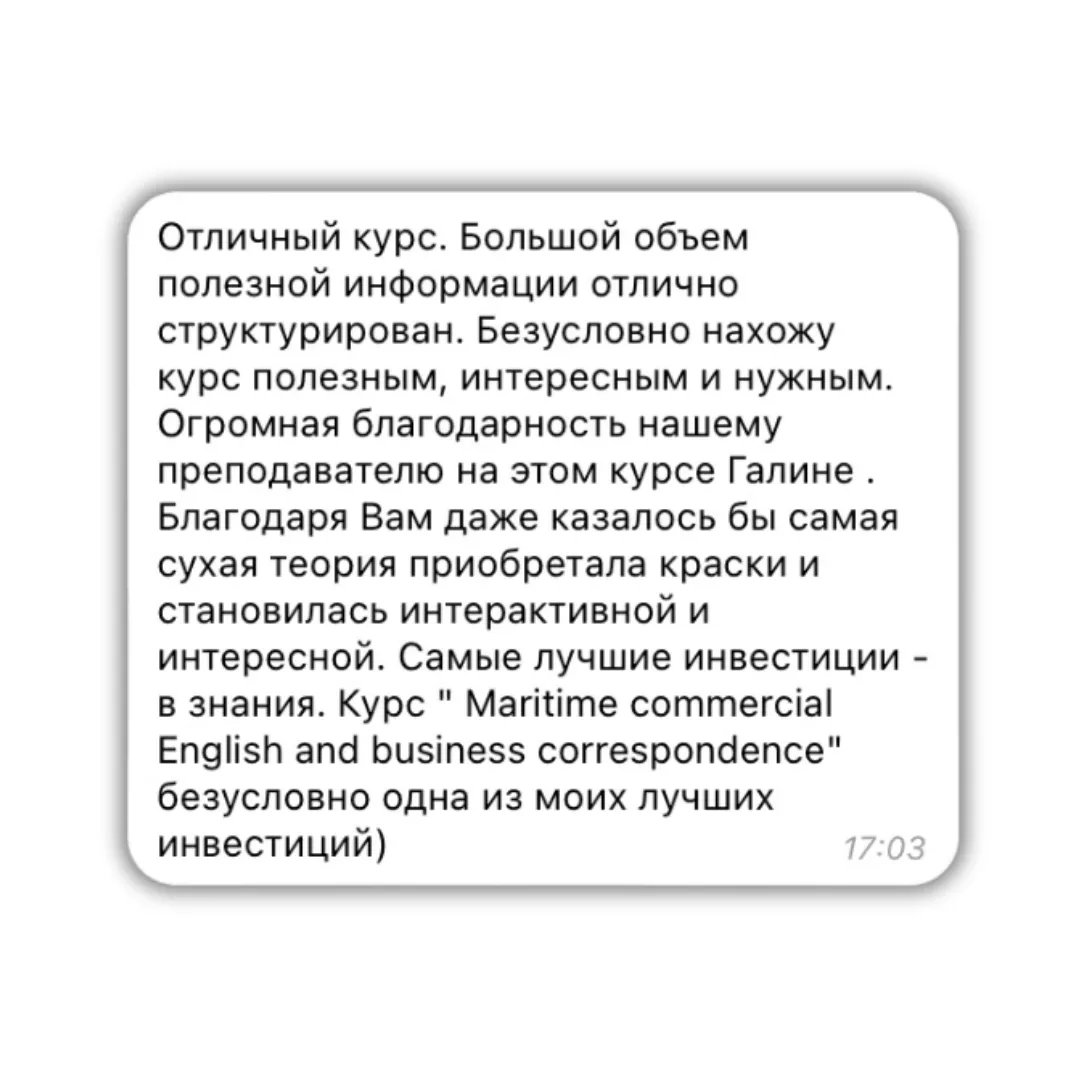
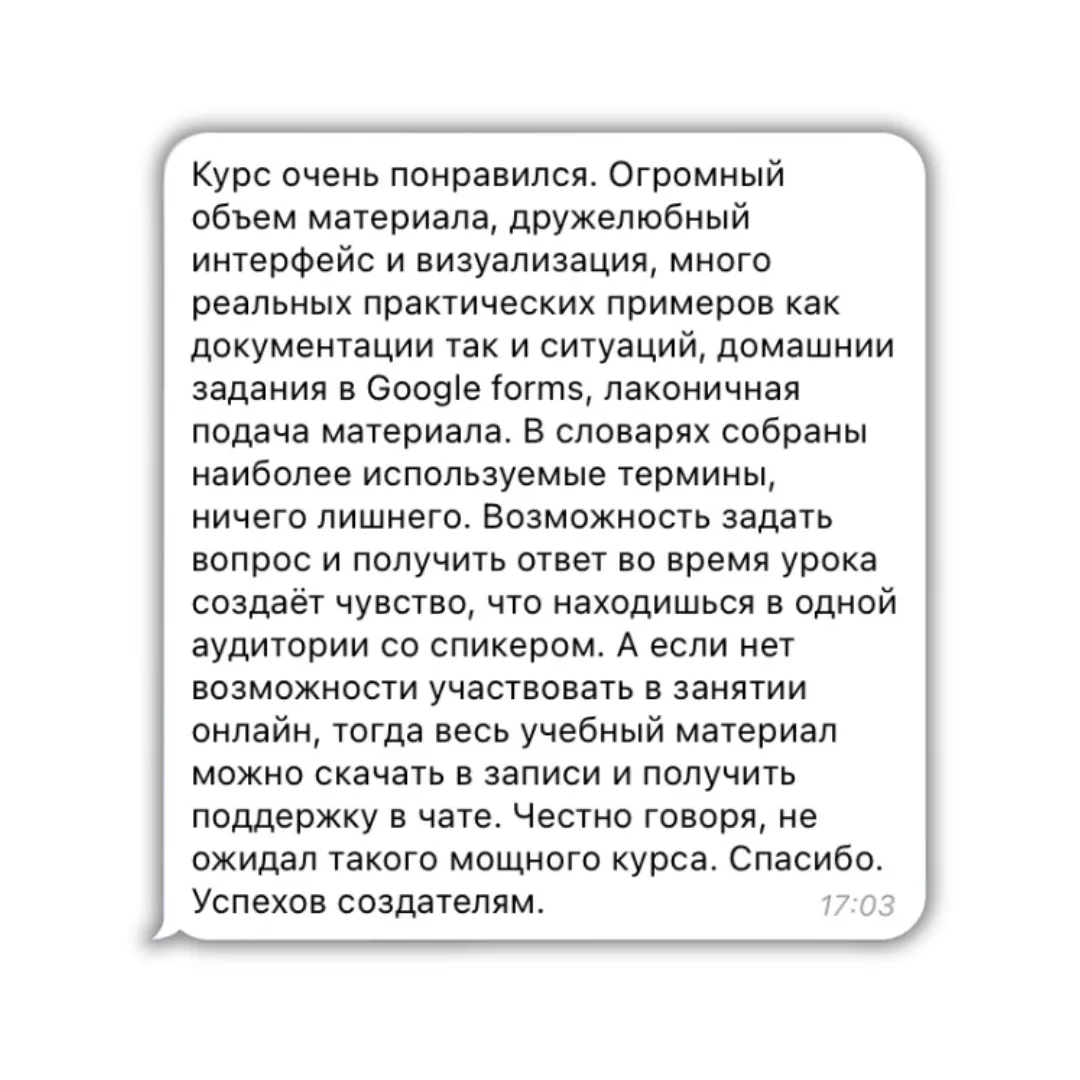
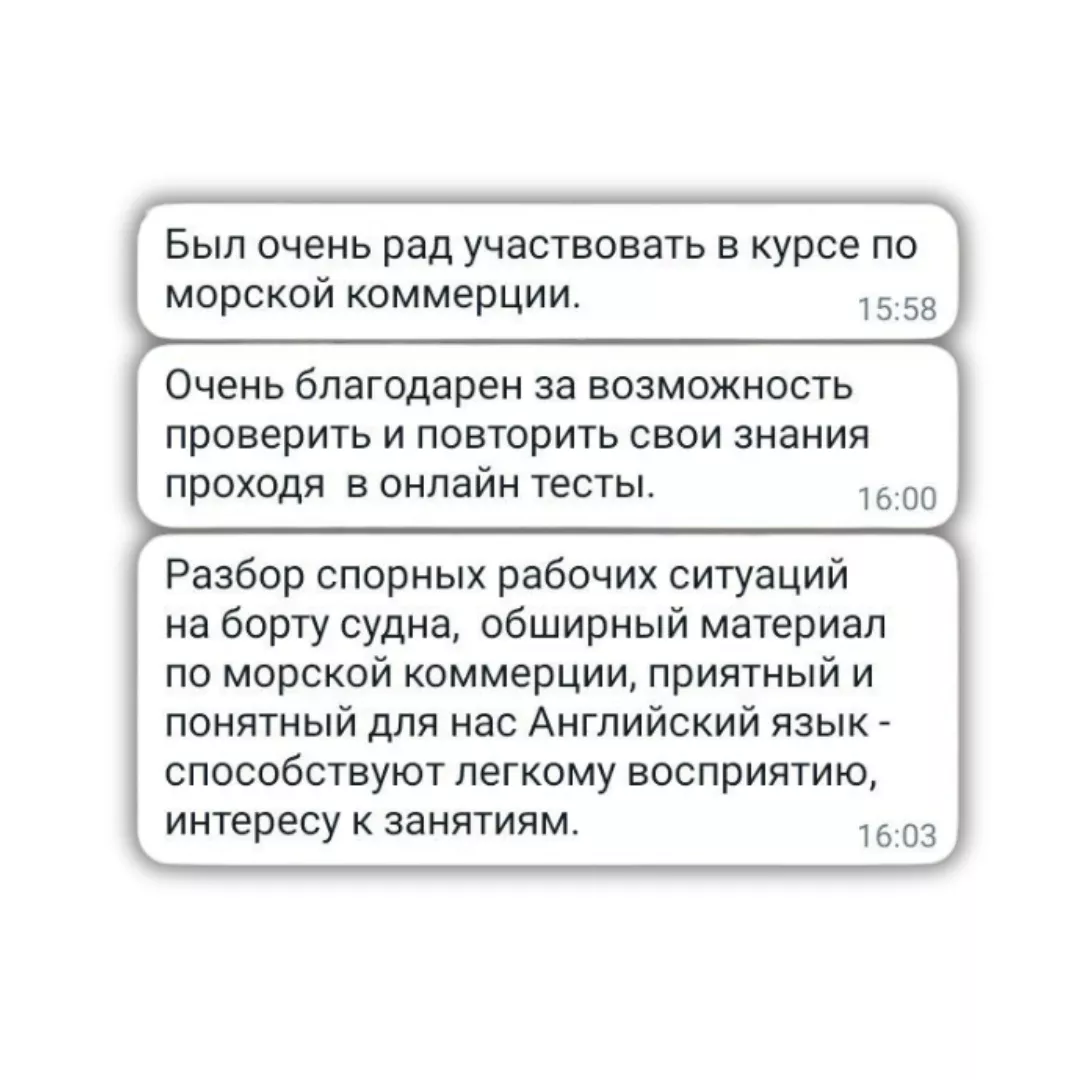
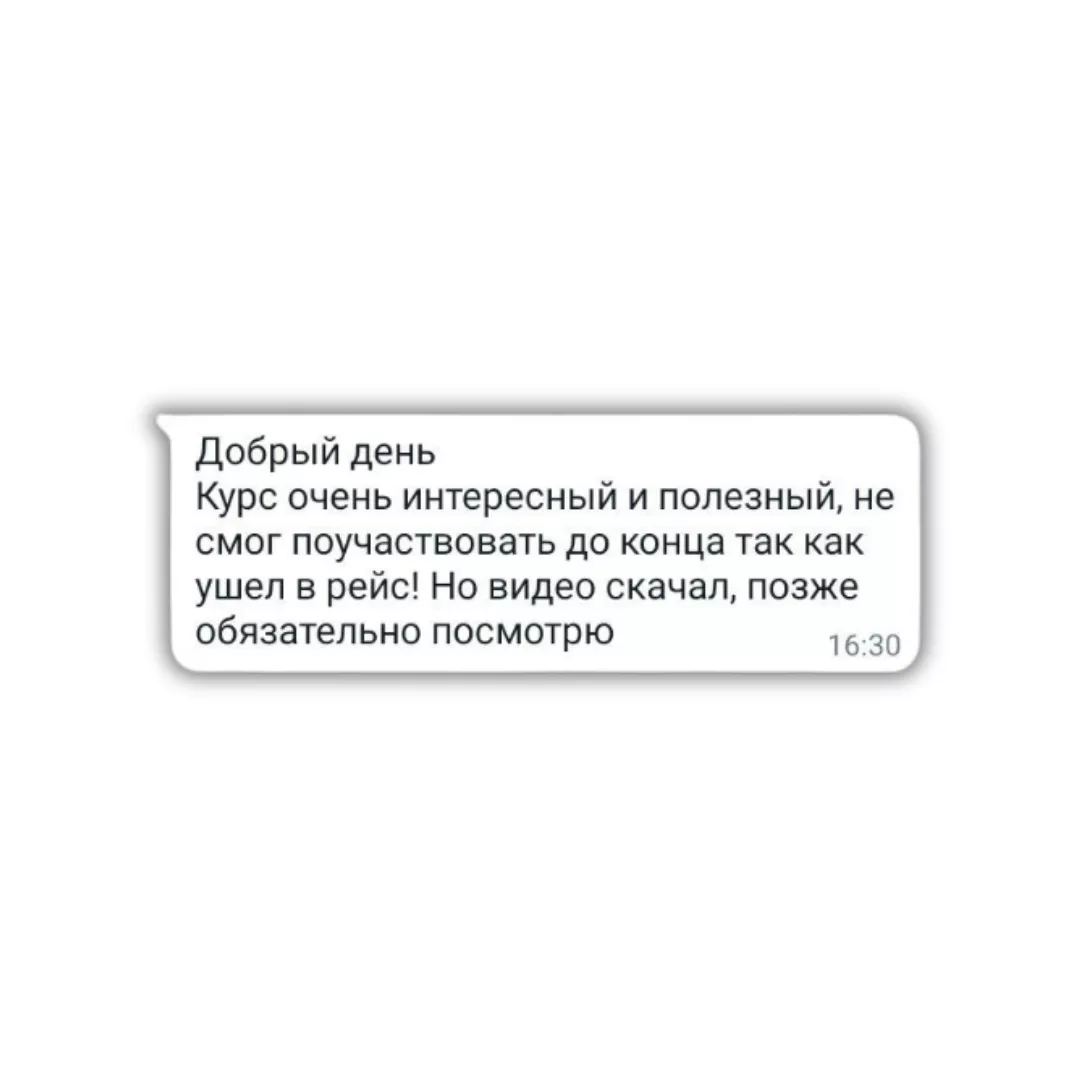
Чтобы успешно строить морскую карьеру, вам нужен хороший уровень английского. На курсе «Commercial English & Business Correspondence (including Manual)» вы получите знания, необходимые для эффективного общения с судовладельцами и агентами, узнаете, как правильно составлять Sea Protest, Damage Report, Accident Report и другие важные документы, а также научитесь грамотно вести деловую переписку. Эти навыки помогут избежать недопонимания, защитить свои интересы и уверенно работать в интернациональных экипажах.
Курс входит в сборник «English For Seafarers Course Pack», где вы также освоите английскую грамматику без сложных домашних заданий и многолетней зубрежки.
Присоединяйтесь, сейчас на этот набор действует специальная скидка!
Посмотрите программу курсов и до встречи на занятиях!
- Bulk Carrier 96
- Commercial 56
- Community Base Content 10
- Container ship 84
- Conventions 73
- Engineers 53
- English 81
- Environmental 32
- Gas Carrier 94
- General Cargo/Heavy Lift 60
- GMDSS 20
- Inspections 85
- ISM & ISPS & MLC 22
- Navigation 97
- Offshore 26
- Other 39
- Safety 75
- Stability 30
- Tanker 93
- Uncategorized 0
- Курс на Берег 0

Присоединяйтесь к Education Marine
Получите мгновенный доступ к бесплатным курсам, которые повысят уровень знаний и продвинут по карьерной лестнице
Читайте так же

Let’s look at some of the most common safety verbs used on...
HAZID is a process used to identify potential hazards during...
Практические знания для моряков, которые не найти в книгах
Copyright©Education Marine | Terms of Service | Privacy Policy | Контакты
Copyright © Education Marine
Terms of Service | Privacy Policy | Контакты
Cookie Notice!
We use cookies to improve your experience on our site. By using our site you consent to cookies.
Accept
Reject